

Iván Abad Founder & COO
How to Handle Objections in Sales (Framework + Scripts)
Iván Abad Founder & COO
How I handle sales objections without offering a discount too early or spending weeks chasing a buyer who was never going to buy.
TL;DR: How to Handle Objections in Sales
- Answering an objection too quickly can cost you the deal. When a buyer mentions a competitor, find out what they still struggle with before explaining why your product is different.
- Ask what they are unsure about, then help them check it. Show how you would solve their problem, work out an affordable offer or help them explain the purchase to a colleague.
- Below are examples for price, timing and “we already use Gong”, with a follow-up email you can adapt and a note your buyer can send internally.
- Convo helps you answer objections while you are still on the call, using the conversation and your company information. Watch the demo.
The Objection I Wasn't Ready For
In February, I was speaking to the operations lead at a 20-person consulting firm in Madrid. Her consultants were spending too much time chasing proposals. They would have a promising first meeting, send something over and hear very little back.
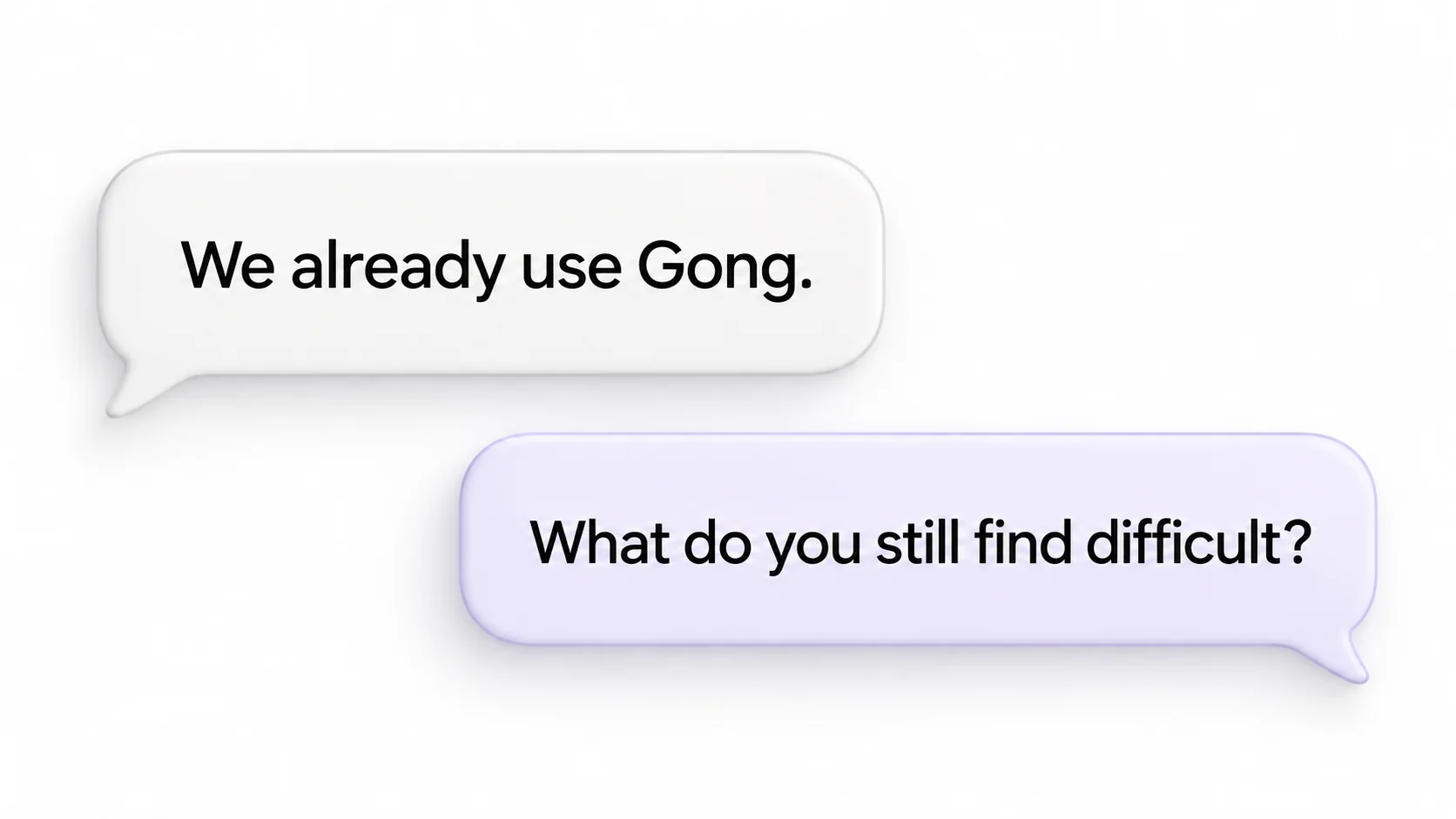
I started explaining Convo. A few minutes in, she said, “This sounds interesting, but we already use Gong for this.”
I told her we had “different capabilities” and went through some of them. She said she would think about it. I sent a follow-up and never heard back.
When she mentioned Gong, I stopped asking about the proposals. I knew how to explain our product, so I went back to the part of the conversation I was comfortable with.
I should have asked her to walk me through one proposal they were chasing. What had the client agreed to before the consultant sent it? Had they discussed who would approve it? We could have looked at where that conversation went wrong and whether I could help.
Instead, I left her to work out why our differences mattered, whether her consultants would use another tool and how she would get them to try it. I had given her more to think about and very little to work with.
The LARC Framework: Listen, Acknowledge, Respond, Confirm
When an objection catches me off guard, LARC gives me somewhere to start.
| Step | What I need to do |
|---|---|
| Listen | Let the buyer finish explaining the concern. |
| Acknowledge | Check I have understood it, asking a question where I need to. |
| Respond | Answer the question, show the evidence or adjust the proposal. |
| Confirm | Check whether that helps and agree what to do next. |
The response takes more work. If someone doubts their team would use the product, explaining another feature does very little. I need to help them find out. The examples below show how I would work through that, including when the buyer's first answer leaves me stuck.
Price Objections: “Just Send Me Your Best Price”
Suppose you have quoted €500 a month for an agreed scope. The buyer says it is too expensive, so you try to understand the concern.
Buyer: “That's more than we wanted to spend.”
Me: “What budget are you working with?”
Buyer: “Just send me your best price and I'll discuss it with my partner.”
I would send the quote. They may need a written price before their partner will even discuss the purchase. Making them answer more budget questions first would make their job harder.
The quote should cover the scope we discussed, the full cost and the terms. Before changing the price, I want to understand what their partner needs to decide.
Me: “I'll put the €500 quote in writing. What will your partner want to check?”
Buyer: “Whether we'd use it enough. I can't promise anything.”
Me: “Who do you think would use it most?”
That gives us something to work out. If only two people need it, I can check whether a smaller package would suit them. If the whole team could use it but the buyer doubts it would help, we can take one of their recent calls and work through what they would want to do better.
Include what you learn beside the price. Their partner should be able to see who the offer is for and what those people would use it for. If you have demonstrated something useful, include that example. Promised time savings are much harder to judge than something they have seen work.
When I would change the offer
“We've approved €300 a month, and we only need it for this smaller team” gives me a reason to revisit the scope. I would check whether we can serve that team for the budget they have, then explain exactly what is included. Ask whether it covers the work they need done before calling the price problem solved.
“Maybe we'd try it if it were cheaper” needs a different conversation. Ask what they want to try and what would make the test worthwhile. They may have a sensible evaluation in mind. They may also be offering a polite possibility because I keep asking for a decision.
I am willing to change an offer when it makes a useful purchase possible for both sides. I want to know what we are making possible before I give anything away. Otherwise I can end up with the same uncertain deal at a lower price.
Timing Objections: How to Follow Up Later
“Next quarter” is reassuring when you want to keep a deal open. It also makes it easy to put a reminder in the calendar and learn nothing else.
Buyer: “Come back to us next quarter.”
Me: “Is there something you expect to have finished by then?”
Buyer: “Hard to say. We just have a lot on.”
I still need to understand whether the problem is worth coming back to. A smaller trial would take time as well, so offering one now would not answer what they have just told me.
Me: “Are you planning to do anything about the time spent chasing proposals this quarter?”
Buyer: “Not at the moment. We need to finish the CRM rollout first.”
Me: “When is that due to finish?”
Buyer: “End of October, if the migration goes to plan. But I don't want another project straight afterwards.”
Me: “Shall I email in November to see where things stand? We can leave a trial until you know you have the time.”
Buyer: “Yes, email me then. I can't commit to more than that.”
My notes should say November check-in, CRM rollout due to finish in October, no trial agreed. Otherwise, three months later, I can easily remember my suggestion as something the buyer accepted.
When November comes, I want to give them a useful reason to reply:
Subject: Following up after the CRM rollout
Hi [Name],
You asked me to get back in touch in November, once the migration was due to finish. How did it go?
If the team has time to look at the unanswered proposals now, we could take a recent one and check what the client agreed to before it was sent. Would that be useful, or is the rollout still keeping everyone busy?
Iván
If they want that conversation, agree which proposal to look at and invite the consultant who handled it. The next call has a purpose, and we can prepare something useful before it starts.
If the rollout has slipped, ask whether they want another check-in. I would send one brief reminder after an unanswered email in this case, then leave it. A buyer without a firm date may still be interested; ask whether they want you to return to it and what would make the conversation useful then.
“We Already Use Gong”
Back to the consulting firm. I should have asked how they used Gong's call review and coaching and what they still found difficult. She had already told me about the unanswered proposals. That was where I needed to spend the time.
The conversation could have continued like this:
Buyer: “I see how that could help. But I can't introduce another tool right now.”
Me: “Which part would take the most work?”
Buyer: “Getting the consultants to try it, then chasing them for feedback. We already struggle to make time for reviewing calls in Gong.”
Me: “Have the consultants asked for help with those calls?”
Buyer: “Mostly it's me. They think the clients are just slow to respond.”
She would be asking her consultants to test a solution to a problem they did not think they had. I needed to help her establish whether there was anything worth changing.
I would suggest looking at one unanswered proposal with the consultant who handled the call. Ask them to take us through what the client said before it was sent. Suppose the client said they would share it with a partner, but nobody asked whether that partner had been involved so far. The consultant may have spent an afternoon preparing a proposal for someone they had never spoken to.
That gives us a specific part of the call to improve. A useful question at the time might have been:
“Would it help to go through the proposal with your partner as well? We can check their questions before I put it together.”
The consultant might say they already know to ask that and just forgot during the call. I can show how live support would help: replay that part of the conversation together in a role-play, ask Convo for a follow-up and let the consultant judge the suggestion. Does it ask something useful? Would they be comfortable saying it to their client?
If they want to try it on real calls, I would start with that consultant. We can do the setup together and agree which calls to use it on. Afterwards, I want to look at a moment where a suggestion helped them ask about the approval process or arrange a proposal review. The consultant should also show me any suggestions they ignored and explain why.
I would agree that review directly with the consultant. The operations lead should not have to recruit the whole firm and chase everyone for feedback just to find out whether we can help one person.
There may be a simpler answer. If agreeing a proposal-review meeting before sending the document solves the problem, start there. If their existing Gong reviews help them make that change, use those. Live support earns a test when the consultant sees a moment where they need help during the call.
Bob Moesta's account of shopping for a camera explains why I would take this approach. He wanted better pictures of his children. Learning about the camera left him facing more work, including learning editing software. A seller can explain the benefits perfectly and still make the purchase feel harder. With this buyer, I would need to help with the test itself.
“I Need to Discuss It With My Team”
Your contact may have to explain the purchase when you are not in the room. Before sending them a deck, find out whether they are comfortable recommending it themselves.
“Before you raise it with them, is there anything you're still unsure about yourself?”
If the operations lead doubts her consultants would use it, discuss that first. If she wants to try it and needs approval, ask what her manager will want to know. Help her prepare that conversation.
For the small test above, I could draft a note for her to change and forward:
I’d like to test live-call support with [consultant]. We want to check whether it helps us ask about the client’s approval process before spending time on a proposal.
Convo would help with setup, and [consultant] would try it on [agreed calls] over [period]. The cost and terms are [details from the quote].
At the end, we’d look at where the suggestions helped and where they didn’t. We can then decide whether it is worth continuing and involving anyone else.
Have your contact correct the note before using it. It should describe the purchase they want to discuss, including the cost and the work involved. If they would not say it to their manager, it does not belong in their email.
For “send me something”, ask what would help. If they only want an overview, send a short one. If they want to evaluate the product, agree what they need to see and who needs to see it. Our sales closing guide covers how to agree the next step when they are ready.
When I Would Leave the Deal Alone
I would leave it when the buyer says the problem is manageable and they have no plans to change anything. There is no need to make them repeat that in several different ways.
An unclear answer needs more care. Someone who cannot give me a budget may still be working out what the purchase would involve. Someone who declines a trial may lack time to evaluate it properly. I can send useful information or agree a later conversation without treating either response as a rejection.
After a difficult call, I want to be able to write down what the buyer agreed to and what remains undecided. “Quote requested; partner still deciding whether they would use it” is enough. It stops me treating a request for a price as evidence that price is the only thing left to settle.
If I cannot explain why they would consider buying at all, I need to revisit discovery. More follow-ups will not supply that missing reason.
Practise With a Buyer Who Can Say No
Take one of the exchanges above into a sales coaching session. Give your colleague a concern to play out, such as not knowing whether the team would use the product. Ask them to begin with “it's too expensive” and let you find out the rest.
No colleague free? Our free Negotiation Prep tool turns your deal into a one-page plan with answers to likely objections, and lets you practise the conversation in ChatGPT.
Keep going after your first question. Your colleague should only agree to a next step if it would help with their concern. Afterwards, ask them which part of your response helped and where you were still answering the wrong question.
Write down what changed in your proposal. In the price example, it might be a smaller package. In the Gong example, it might be a test with one consultant and your help with setup. Keep the buyer's words beside the response in your sales playbook, so someone else can understand when to use it.
Review won deals too. April Dunford recommends studying why suitable customers choose you. Ask a recent customer what nearly stopped them buying and what helped them decide. That gives you something worth preparing for the next buyer who raises the same concern.
Get Help With the Response During the Call
On the Madrid call, I needed to notice that I had stopped asking about her problem. It is much easier to see that now, with time to think about the conversation.
When a buyer says she needs to speak to her partner, I want to know what that partner needs to decide before I write the proposal. Live Assistant can pick up on this and suggest a follow-up question automatically while we are still talking. I might ask, “What do you think your partner will be unsure about?”
For questions about our product, Convo can draw on the information I have added to its knowledge base.
When I want help with something specific, I can open Ask AI and choose “Follow-up question” or “How can I answer?”. It uses the conversation so far, with relevant company information and past-call context when available. I can also ask my own question:
“She is worried about getting the consultants to try another tool. What could we offer to help her evaluate it?”
I read the suggestion and decide whether it fits what she has told me. It gives me somewhere to turn while she is still there to discuss it.
Markus and I show the live help in the video above. The Live Assistant guide explains the setup.
If you try Convo, bring an objection you find difficult to answer. Use it during the call and judge whether the help lets you have a better conversation with that buyer.
Frequently Asked Questions
How do you handle objections in sales? Listen to the concern and ask enough to understand it. Respond with something the buyer can use to decide, such as a demonstration, a revised offer or the information they need for approval. Check whether it addresses the concern and agree what to do next.
What are the most common sales objections? Price, timing, an existing supplier, other people's approval and lack of need are common objections. Each can require a different response depending on what the buyer is trying to decide.
What should you say when a buyer asks you to follow up later? Ask what they expect to change and agree when to check in. When you follow up, refer to that event and suggest something useful you could work on together. If the buyer agreed only to an email, ask before arranging a trial or another meeting.
Should you offer a discount for a price objection? Find out what a lower price would make possible. A smaller scope may work within an approved budget. If the buyer is unsure they would use the product, help them assess that first. Give a clear quote even when they cannot share a budget.
What is the LAER objection-handling method? Carew's LAER method stands for Listen, Acknowledge, Explore and Respond. In the LARC sequence used here, clarify the concern before responding, then confirm whether your answer has addressed it.
Are objections always buying signals? No. A buyer may have a question without intending to purchase. Ask enough to understand what they are considering and accept a clear refusal. An unanswered question or an uncertain timeline alone does not establish that they are a poor fit.
Can AI help with objections during a sales call? Convo can suggest a follow-up question or bring up a prepared response using the conversation and relevant company information. You decide what to say and should check factual details before making a commitment to the buyer.
Iván is the co-founder of Convo, focused on operations and growth. Background in marketing and sales. Knows firsthand what it feels like when a conversation doesn’t go the way it should.
Ready to transform your meetings?
Join professionals using Convo to feel confident in every conversation.
Get StartedCONTINUE READING